Clinical Research Studies
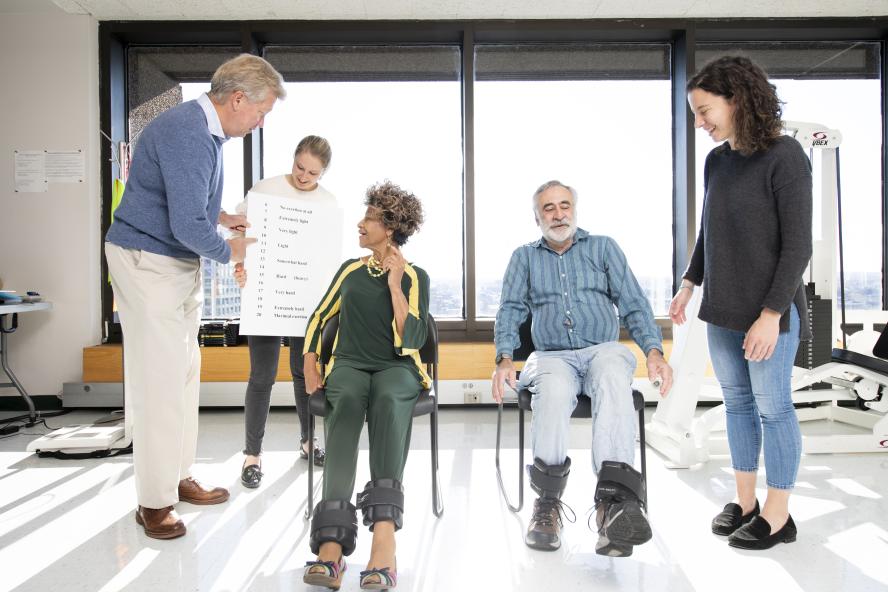
We support healthy and active aging through research focused on nutrition and physical activity. Our studies explore key questions about how diet and lifestyle impact health, ultimately shaping dietary guidelines and interventions that benefit millions of Americans. Because participation in research offers the most relevant insights for real-world application, we are always seeking volunteers to take part in our clinical studies.
Study #3190 Gut Mini-pill Study
The purpose of this study is to compare whether consuming two (2) meat entrees or two (2) plant-based meat alternative entrees per day changes the types of microorganisms in your gut and stool, as well as blood biomarkers related to heart disease risk.
Study #3195 Resistance Exercise Response - The BRIO Study
The purpose of this study is to examine how cellular processes related to aging may influence a person's response to exercise, including changes in muscle size, muscle strength, and their body's response to dietary carbohydrates.
For more information about these studies, please call Volunteer Services at 617-556-3013 or email volunteers-hnrc@tufts.edu. Someone from our team will contact you to conduct an initial screening over the phone. If you pass the initial screening you will then be invited to come to our center for a more in-depth screening to determine eligibility with our nursing and dietary staff, depending on the study.
-
Our scientists are testing many theories about nutrition, aging and health. Through nutrition and exercise research we study conditions and diseases that affect the quality of life and health care costs of older adults. These include studies of immune function, vitamin and mineral absorption, physical capacity as well osteoporosis, cardiovascular disease, diabetes, cataracts and macular degeneration. Our research contributes to the evidence base used to inform nutrition and health policy for older Americans.
-
The length of each study can vary from one day to one year or more. Nonresident studies require study participants to make occasional visits (which vary among studies) to the HNRCA for testing or meals. Some studies require volunteers to live at the HNRCA for a specified period of time.
-
The HNRCA is located in downtown Boston, adjacent to the Tufts Medical Center. Our address is: 711 Washington Street Boston, MA 02111. We are accessible by MBTA (Orange line & Silver line Tufts Medical Center stop, Green line - Boylston Street stop). Parking is available at a reduced rate at the Tremont Street Parking Garage next to the Wang Center.
-
Should your study participation require that you reside at the HNRCA, you will be provided with a private room and bathroom. Each room is equipped with a TV and telephone.
-
Yes! Your time and participation are valuable to us. Study participants are compensated based on the length and complexity of the study. Payments are issued by check on a scheduled basis throughout the study.
-
People ranging in age from 18 to 100 years have participated in our research. The majority of our participants are from New England, however, many individuals from across the continental United States have participated. Over 9,000 people have enrolled in the studies since the HNRCA's opening in 1982.
-
If you are interested in participating in a study, please call us at 617-556-3013 or email volunteers-hnrc@tufts.edu. Someone from our team will contact you to conduct an initial screening over the phone. If you pass the initial screening, you will then be invited to come to our center for a more in-depth screening to determine eligibility with our nursing and dietary staff, depending on the study.
Examples of our past clinical research studies
Study summary: Lifestyle interventions and independence for elders (The LIFE Study)
Helping older adults maintain their independence and quality of life often depends on preventing mobility problems. The LIFE study, a randomized controlled trial conducted at multiple centers, examined whether regular, moderate exercise could help prevent these issues compared to a health education program. Study participants engaged in exercises that involved walking at a moderate pace, doing basic leg-strengthening and balancing exercises, and stretching. The HNRCA was one of eight centers that enrolled and followed approximately 1,600 inactive older adults over three years. HNRCA study coordinators managed participant recruitment, led exercise activities, and assessed outcomes, while the HNRCA’s Metabolic Research Unit collected blood samples that were processed by the center’s Bio-Analytical Support Laboratory. The results showed that older adults who participated in a structured, moderate-intensity exercise program were less likely to develop mobility difficulties than those who only received health education.
- Read our study on the impact of physical activity on mobility challenges in older adults
- Learn more about the impact and lessons from the LIFE study
Study summary: How strawberries may help older adults' cognition
Strawberries contain natural compounds that may help reduce inflammation and improve older adults' cognition and mobility. To test this, HNRCA researchers conducted a randomized controlled trial, recruiting 37 healthy older adults through the Center's Metabolic Research Unit (MRU). Participants randomly received either a strawberry powder (equal to about two servings of strawberries) mixed in water or a similar-tasting placebo each day for three months. During the study, participants took a range of cognitive tests and had their gait and balance assessed on a treadmill. The MRU collected blood samples which were processed by the HNRCA's Bio-Analytical Support Laboratory, and the Center's Dietary Assessment Unit assessed what participants ate. The results indicate some improvements in cognition for those who received the strawberry powder, but no changes in gait or balance. Additional studies with larger groups and longer follow-up are needed to confirm these findings.
Additional past studies
-
As people get older, losing muscle mass and strength can increase risk of falls and mobility challenges. In this HNRCA study, researchers assessed whether protein or alkali supplementation helps improve muscle mass and strength in 128 older adults who were not very active and who consumed the recommended amount of protein in their diet. Participants were randomly split into four groups: one received whey protein with an alkali supplement (potassium bicarbonate, KHCO3), another got whey protein with a placebo, a third received KHCO3 with a placebo, and the fourth group got two placebos. The researchers measured leg strength and power, grip strength, and lean body mass using a specialized x-ray. Throughout the six-month study, the HNRCA's Dietary Assessment Unit monitored what participants ate. The Center's Metabolic Research Unit collected blood samples, which were tested for potassium, bicarbonate, creatinine, and insulin-like growth factor 1 (IGF1)—a hormone important for muscle growth—as well as other biomarkers, by the Center's Bio-Analytical Support Laboratory (BASL). The BASL also analyzed urine samples for nitrogen and acid. The study found that while whey protein and KHCO3 raised circulating IGF1, neither supplement helped improve muscle mass or function.
-
Calorie restriction means reducing calorie intake while still getting enough nutrients. This approach has consistently been shown to improve health and extend lifespan in animals. The CALERIETM study, a large randomized controlled trial, tested whether calorie restriction has the same benefits in people. It included 220 young and middle-aged adults without obesity, and took place at three locations in the U.S., including the HNRCA. Those assigned to calorie restriction received individual and group counseling for two years and reduced their calorie intake by approximately 12%. For the first month at the HNRCA, all meals were prepared for participants on site through the Center's Metabolic Research Unit (MRU). Control group participants continued their usual diets without any counseling. The HNRCA's Dietary Assessment Unit tracked what both groups ate, while the MRU collected blood samples, that were analyzed by the Center's Bio-Analytical Support Lab. The study found that calorie restriction can benefit people by slowing down some aging processes and builds a foundation for future studies and potential ways to promote healthy aging.
-
Trans-fatty acids are formed when liquid vegetable oils undergo partial hydrogenation, a process that transforms them from liquid to semi-solid state. Because trans-fatty acids raise blood cholesterol, especially the harmful LDL cholesterol, scientists at the HNRCA conducted a study with 36 adults who had slightly elevated LDL levels to compare different types of partially hydrogenated fat. Participants were provided with diets containing six different fats, each for 28 days, with a short break in between. The diets were similar except for the main source of fat. All meals were prepared by the HNRCA's Metabolic Research Unit (MRU). The MRU collected blood samples at the start and end of each diet, and the Center's Bio-Analytical Support Lab analyzed cholesterol levels. Results showed that compared with butter (high in saturated fat), soybean oil (high in unsaturated fat) resulted in the lowest LDL, followed by soybean oil-based semiliquid margarine, soft margarine, shortening, and stick margarine (highest in trans-fat). This research established that trans-fatty acids are harmful to blood cholesterol and helped inform policy changes to reduce trans-fatty acids in the U.S. food supply.