Nutritional Epidemiology Team

Mission
The overall mission of the Nutritional Epidemiology Team is 1) to identify environmental, lifestyle and genetic factors that influence the nutritional status and requirements of the elderly, and 2) to determine the role of nutritional status in healthy aging and the development of chronic disease and age-related impairments such as cardiovascular disease, dementia, type 2 diabetes, and age related eye disease. Our mission will be achieved through the application of epidemiological methods and community-based investigation of aging population samples.
Objectives
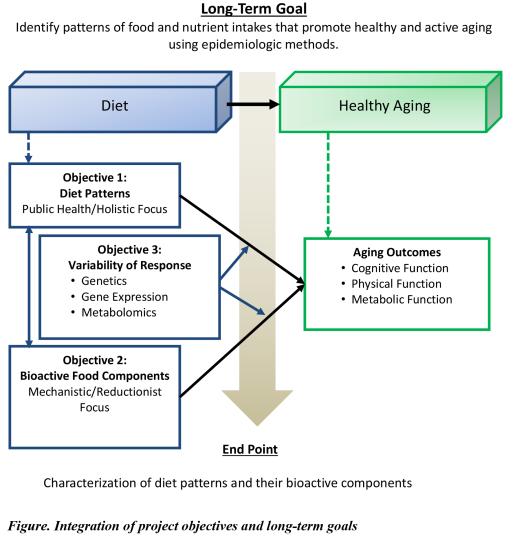
The long-term goal of the Nutritional Epidemiology Team is to identify patterns of food and nutrient intakes that promote healthy and active aging using epidemiologic methods. We are focused on the following objectives to achieve this goal.
- Characterize diet to determine patterns that associate with healthy aging, and construct models of the various components of these dietary patterns to determine the contribution that each component of the pattern provides to overall associations, while concurrently considering the joint associations of different dietary components.
- Determine the relationships between specific foods, nutrients, and other bioactive dietary components of dietary patterns and healthy aging and key elements of healthy aging, such as physical, metabolic, musculoskeletal, vision, and cognitive function.
- Examine the potential genetic modification of the relationships between dietary patterns and their constituents associated with healthy aging, and employ metabolomic and transcriptomic “signatures” of optimal dietary patterns and of healthy aging to detect pathways that may link diet and healthy aging.
Team Members
Paul F. Jacques, DSc
Lead Scientist, Senior Scientist
Research focus: Diet patterns and diet quality, protein, hydration, and B vitamins and their relation to healthy aging assessed through maintenance of physical function, and cardiometabolic health and cognitive health
Naglaa El-Abbadi, PhD
Scientist III
Andres Ardisson Korat, ScD
Scientist II
Additional Team Members
Madeline Nunes, Staff Assistant
Richard Minogue, Research Administrator I